
Ecosystem Monitoring
Complete coral reef monitoring from baseline to long-term trend
MariMap supports the full coral reef monitoring workflow. Run benthic transects, fish surveys, bleaching assessments, and habitat complexity measurements with standardized protocols. Track restoration outcomes from nursery to outplant. Satellite temperature and bleaching risk data arrive automatically.
What you can monitor
Benthic community composition
Assess hard coral cover, soft coral, algae, and substrate types using point intercept or line intercept transects. Track community shifts over time with consistent spatial sampling across permanent transects.
Fish populations
Record fish species, abundance, and estimated size classes along belt transects. Generate biomass estimates and species richness metrics that reveal trophic structure and grazing pressure on reef substrates.

Bleaching events
Document bleaching severity and extent across coral colonies with standardized color reference charts. Track recovery trajectories and identify which taxa and morphologies show the greatest thermal resilience.
Habitat complexity
Measure rugosity and structural complexity using chain-tape ratios or visual scoring methods. Habitat complexity drives fish abundance and biodiversity, making it a key indicator for reef health assessments.

Restoration outcomes
Track coral fragments from nursery propagation through outplanting to long-term survival. Record growth rates, mortality, and colony condition at each monitoring interval to evaluate restoration effectiveness.

Environmental context
Integrate satellite-derived sea surface temperature, current patterns, and bleaching risk alerts with your field observations. Environmental context helps explain biological patterns and identify emerging threats.
Coral reef protocols
Restoration integration
MariMap connects coral restoration workflows directly to monitoring outcomes. Track nursery structures, individual coral fragments, outplanting events, and post-outplant survival in a single system. Each restoration site links to the same environmental data and survey protocols used for natural reef monitoring, so you can compare restored and reference sites with the same metrics.
Explore restoration management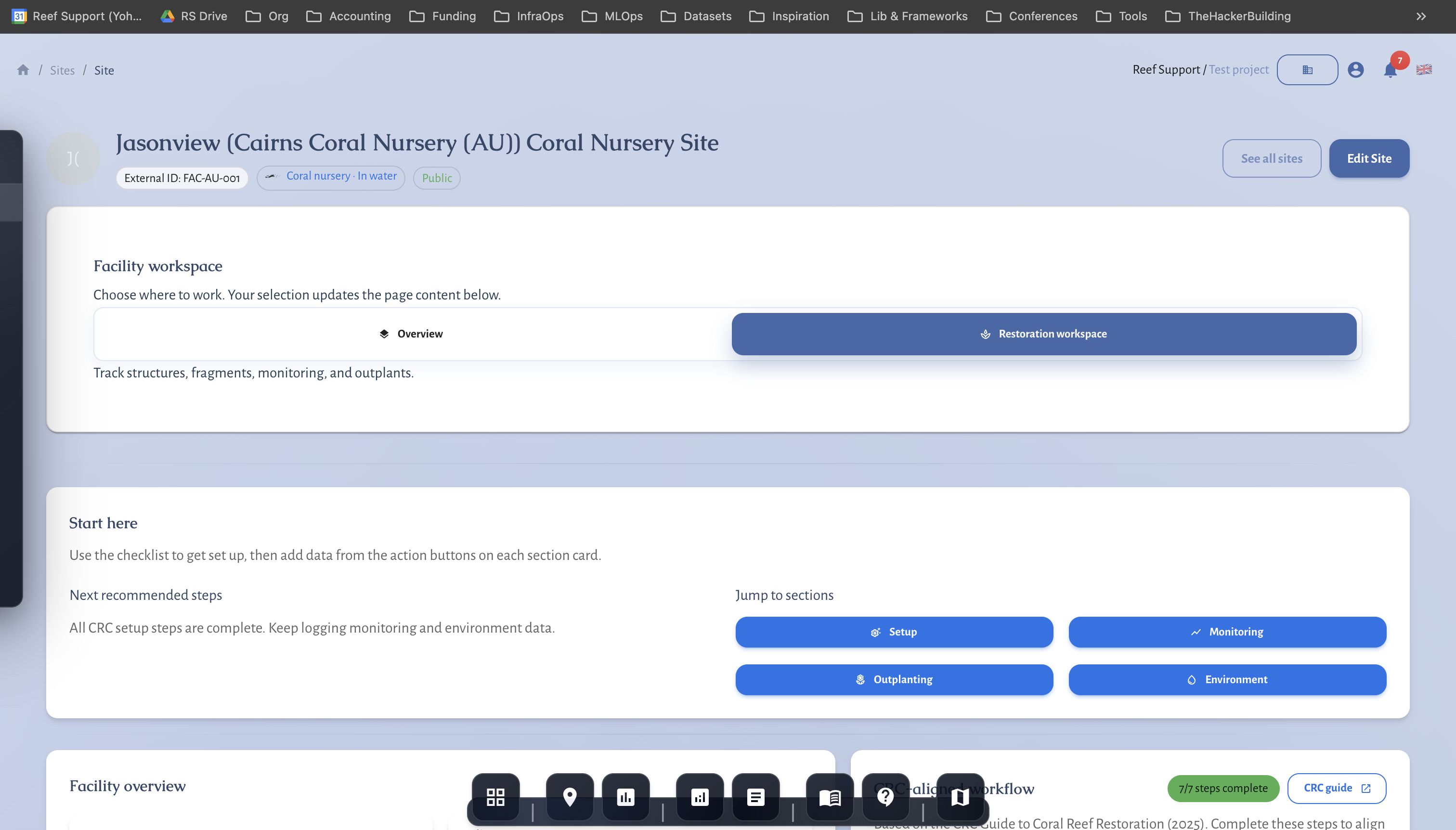
Environmental data for coral reefs
CMEMS Sea Surface Temperature
DailyDaily sea surface temperature and ocean current data from the Copernicus Marine Environment Monitoring Service. Automated delivery for every monitoring site.
NOAA Coral Reef Watch
DailyBleaching alert area, degree heating weeks, and hotspot data from NOAA Coral Reef Watch. Receive early warnings when thermal stress approaches bleaching thresholds.

CLMS Land Cover
Annual updateCopernicus Land Monitoring Service data for catchment land use analysis. Identify agricultural and urban pressures in coastal watersheds that contribute to nutrient runoff and sedimentation.
Sentinel-2 Habitat Mapping
5-day revisitHigh-resolution multispectral imagery from the Copernicus Sentinel-2 mission. Supports benthic habitat mapping and shallow-water classification across monitoring sites.
Ready to put MariMap to work?
Talk to our team about your monitoring programme, or start exploring the platform right away.